3.19.2006


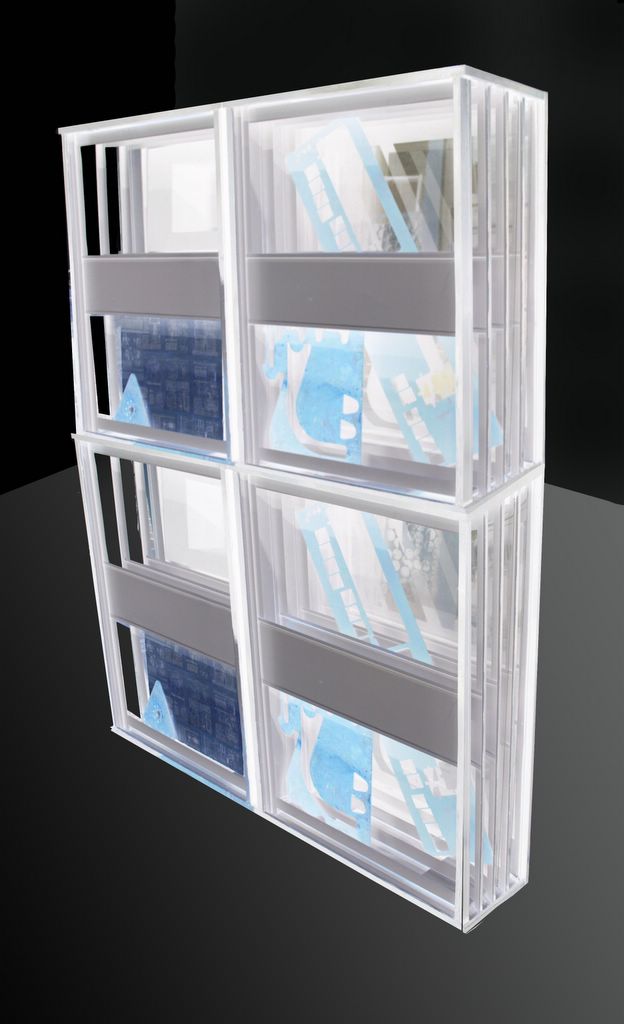
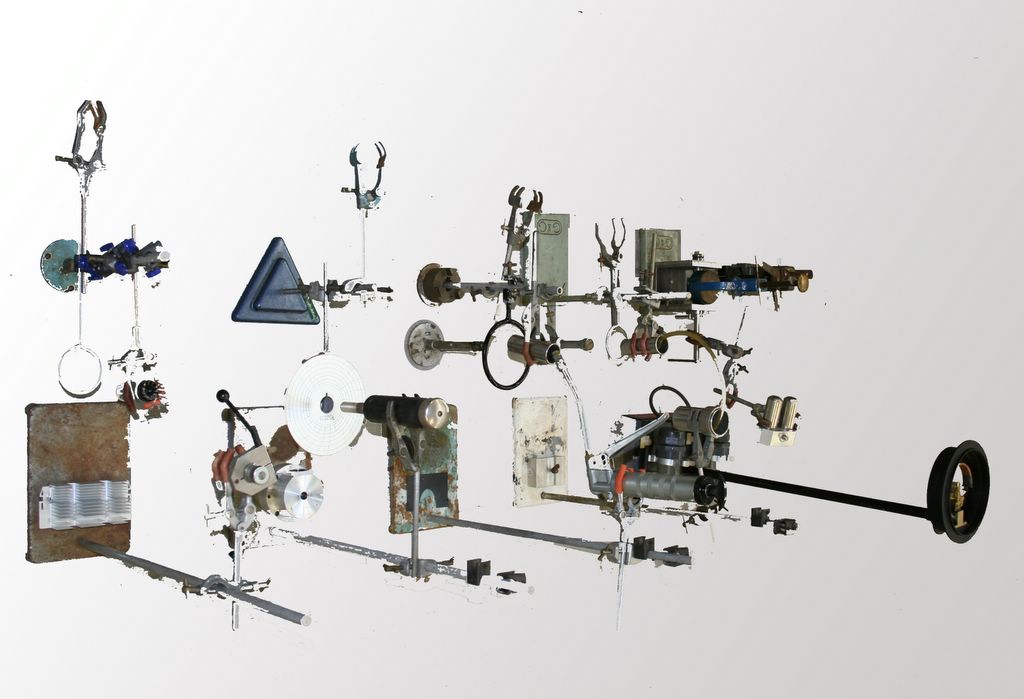
Hoold on a minute Posted by Picasa

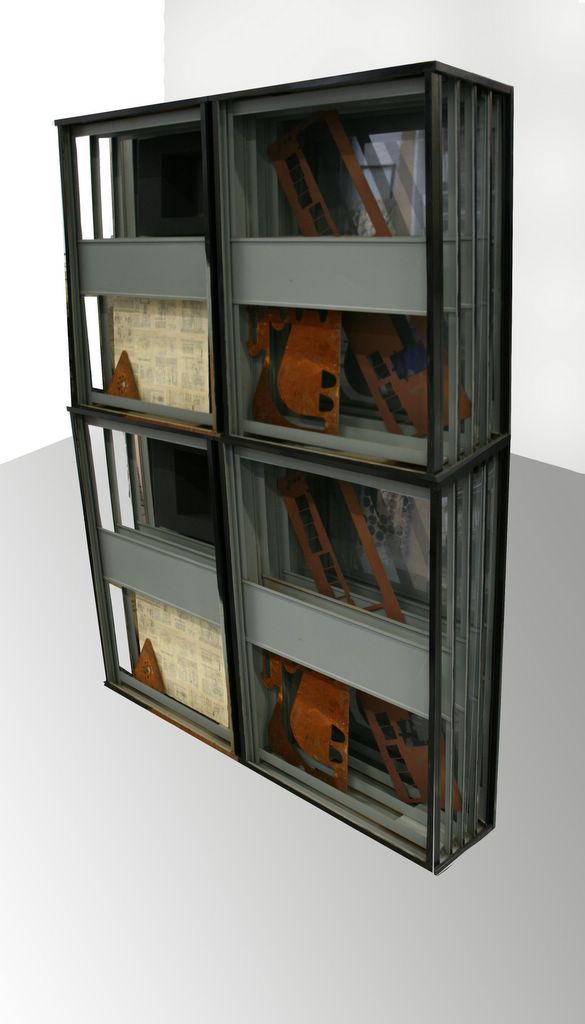
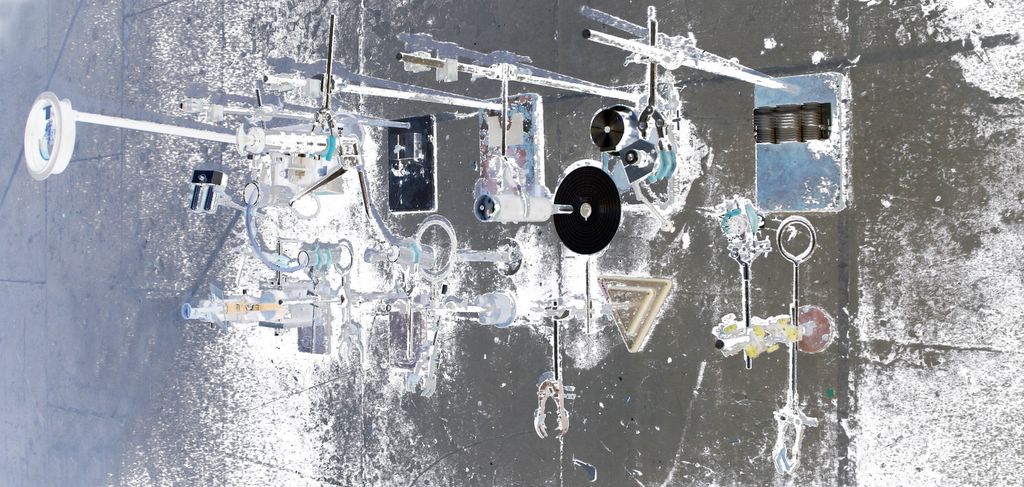
the Dark Side Posted by Picasa

3.17.2006


"After the MA" - Research Posted by Picasa

Martin not Martins... Philosopher not Saint... Posted by Picasa

Poem Posted by Picasa
The words I posted previously on the topic “Eclectic reflections on Art and Language” were written before Christmas. When I finally came back to work on them I realized that the practical work I was producing was worrying tutors and was also motivating strange behaviours. For example, other students were taking objects because one of my installations “looked like a pile of garbage”. I know it did, but after all it was in a sculpture art studio in a University! One way or the other this frustrated me. If it were an expressionist painting people would “pretend they were getting something from it”. It’s not because this was not a successful installation that its automatic destruction is allowed. For my reflections this credit given to painting and not to the installation work I’ve been doing became relevant but the text that I managed to write was too subjective and personal to be included in this report.

7. Why should I write about Hermeneutics?

My initial plan was to finish this report with research on this topic and a few other areas of similar intellectual relevance. However it suddenly became more significant to argue that this theoretical research is actually productive and strategically crucial for me as a practitioner.
To avoid the fact that this text could become a mystical reflection on language I will underpin the research objectives I achieved and argue for their relevance in what relates to my practice.
Instead of choosing the science park external project (painted mural) to become a pivotal piece, which would be an easy path, I will try to prove the relevance of this investigation for the installation practice. This mural was a parallel project and that is how I want to think about it. The burocracy and the “installation” of the six panels were almost as relevant as the creative development of the painting itself (see external project file).
To start my argument I would like to put forward evidence that contemporary thinkers actually believe words in general and text in particular are crucial to establish artistic periods. Claire Bishop writes the following lines related to the historical scope of her book on Installation Art:

[…] the majority of examples featured here [her book] date from 1965 to 1975, the decade in which installation art comes of age. This is because it is at this time that the main theoretical impulses behind installation art come into focus: ideas of heightened immediacy, of the decentred subject (Barthes, Foucault, Lacan, Derrida) and activated spectatorship as political in implication.
Bishop, Installation Art, page 13

It could be argued that this importance given by this author to written publications is typical of art critics, writes, philosophers and teachers. However as a practitioner I always felt language was crucial for my installation work and I was quite sure many others would feel something similar happening within their practice.

Anyone who is worth their grain of salt has to use the world around them. An artist’s responsibility is to acculturate the world. That’s what one does. And you can’t do it properly without some kind of “form language” – without some kind of system of reading and looking at the world. The better equipped we are to acculturate, the better reading you can give of the world around you. […]
I think that the works are about perception, but I also think that there are many ways to “read”. I’m fascinated by language, but I think we need to think of it in a much more contemporary sense. Written word is no longer just the written word. There is the spoken word there is the picture. Because of technology, we now have a very short circuited kind of language – a layered language – and I think that’s what I like my works to do. I like to think that this is how people perceive. That’s why I became interested in the media, I think, because of a new language base.

Sonnier, Sculpture Magazine January / February 2006, p.54 / 57

Keith Sonnier is an artist I respect for his past and cutting edge attitude. Even if I feel distant from his “face like” (apparently unintentional) formal compositions, I take his work as a reference. After all he was the first using video and his concerns and the media he uses are basically the same as mine.
Just to give one last example of the relevance of language and its understanding for other generations of artists I find Banks Violette quite significant.

Language Systems are predisposed to collapse: a lot of what I do references sub-cultures in which people seal themselves off and elaborate a language that becomes more and more complex. The logical conclusion is to make it end tragically to prove they are not acting.

Banks Violette, Sculpture Magazine (December 2005), p.19

In this quote we don’t only have the proof of the importance given to a language research but we also have the use of language to promote and enhance some of the installation’s qualities. In my practice I have something very similar happening with a specific subculture that made their language so complex that even suicide is not that far away (if we take it from a social point of view). I’m talking about the scientific community.
After I had collected enough references to language is practitioners interviews and critics texts in newspapers I realized the only way to push my reflection forward was to embrace a research for more consistent art journal articles or even philosophy books. I aimed to find material on the areas related to hermeneutics, aesthetics and an analysis of the problems that emerge from these to see if I was going to find support material or on the contrary ideas I had to “fight against”. I found two published papers that synthesized my worries and backed me up in my approach to theory versus practice, conceptual versus sensuous and the formal.
The first, called Inseparable Insight: Reconciling Cognitivism and Formalism in Aesthetics, is an essay about the inseparability of form and content in art and aesthetic cognitivism.
The thesis of inseparability states that (1) it is impossible to have the same content in two different forms; and (2) it is impossible to have the same form in two different contents. […]
Aesthetic Cognitivism and Aesthetic anti-cognitivism can be defined as opposing responses to two questions: (1) Can art provide knowledge? And, if it can, (2) how is this aesthetically relevant?

Thomson-Jones, J. of Aesthetics and Art Criticism (Fall 2005), p.375 / 376

In this article it is argued that Cognitivism is compatible with the inseparability thesis in a rigorous and consistent way. The content of this article didn’t just help me clarify ideas about the theoretical approach I have to these problems but it also helped me understand and change my perspective on painting and installation. I thought initially (while writing appendix 2) that painting was the sensuous media par excellence and installation the conceptual cerebral media. After I read this essay I realized the opposite happened in my practice. Because painting was a self sustained process (not requiring any political ideals to influence the process of production which is still the traditional one) it started developing a cerebral and almost aseptic structure in the content I put into it. The murals are a good example of this but there is even more recent work where the same is happening. The opposite happened to what I felt in my installation work. I understood that my initial motivation was an intuitive response to the objects and that meant a formal / plastic approach to start working. After this first interaction happened the content easily found its place and importance in the work due to the politically based process of making and the meanings the found objects carried with them. These usually triggered a response in me that led to a title or a certain idea being enhanced later on.
This made me think that none of these media was more conceptual or formal then the other even if at a certain point I thought a new formalism might be erupting in my 3D work. Because these two components are present in all the media I work with I started questioning if this conflict between practice / theory, aesthetic experience / hermeneutics, art / language was universal or not? Being useful or not, it was quite obvious to me it was this “Friction” that made “art works work”. At this point of my research I found an article called: Aesthetic F(r)iction: the conflicts of visual experience. In this article the “formative role” of this same conflict I was thinking about is sustained by an accurate philosophical analysis of hermeneutics and its interactions with art.

First: Aesthetic experience both situates and, indeed, emerges from a conflict between art’s material (practical) dimensions and its conceptual (theoretical) dimensions. Second: aesthetic experience marks such a site because it is hermeneutical in nature: i.e. it is occasioned by a productive friction between, the sensuous and the intellectual. Third: the productive friction between the practical and the intellectual components of an artwork offers an explanation of how art works work, that is, actively engage, enthral or distress us. Such conflict is fundamental to such work insofar as the task of an artwork in above all to make something appear. Such appearances, I shall argue, are born of conflict.

Davey, Journal of Visual art Practice, Volume 4 Numbers 2/3 2005, p. 135

I had a double feeling about this article. On one hand I was happy there was a recent paper published with the exact same ideas I was exploring, on the other hand I felt a bit frustrated because I didn’t do it quickly enough to be bale to compare my results to Davey’s.
Like Keith Sonnier said in the interview mentioned above in a much simpler and less rigorous way:
Such a theorization of the hermeneutical element with aesthetic experience raises a fundamental question concerning the relation of aesthetic experience to language. Insofar as individual aesthetic experience is linguistically mediated.

Davey, Journal of Visual art Practice, Volume 4 Numbers 2/3 2005, p. 136


What I need to ask now is: why was I arriving to the same worries and conclusions as an academic philosopher researching hermeneutics? Is it because I was theorizing my experience and researching its relevance when compared to other practitioners? Was it just because I was researching pure theory instead of some practical properties of my work? To give the best answer to these questions I need to be completely honest and say that there is nothing more practical and relevant in my fine art practice than to understand the essence, the processes and the origin of the work and everything related to it. Interpretation and the conflicts I approached as problems ended up proving to be my best allies in the pursuit of a more confident practice. Any true philosopher would say praxis is one of the most relevant consequences of the philosophical engagement.
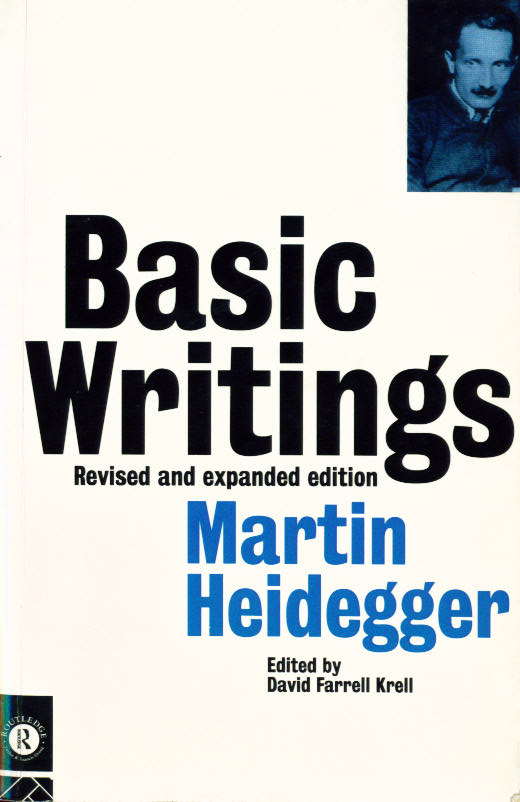
It was wonderful to be able to read Heidegger pointing out Art’s properties, stating crucial thoughts ob the work of art, what he believes to be its origin. The full exploration / exploitation of these areas is for me more relevant then any technical or more linear analysis of my work.
The vocabulary I developed during this exploration had a correspondent intellectual and artistic development. When one becomes familiar for the first time with the sensuous, the formal, the aesthetic, the visual and plasticity as concepts distinct from each other but still related, one can say there was an improvement. When finally we feel our awareness expanding and undergoing an exploration of the super sensuous and its historical relation to the sensuous, first with Plato’s “mimesis attack” and then with Nietzsche’s denial of that same theory and valuing the sensuous above the super sensuous, we know we’ve changed. According to Heidegger one can extract Five Statements from Nietzsche’s thoughts:
1. Art is the most perspicuous and familiar configuration of will to Power.
2. Art must be grasped in terms of the artist.
3. According to the expanded concept of the artist, art is the basic occurrence of all beings; to the extent that they are, being are self-creating, created;
4. Art is the distinctive counter movement to nihilism […]
5. Art is worth more than “the truth”.
Heidegger, Five Statement on Art, p.75

I’m not sure if I agree with Nietzsche (or what Heidegger extracted from his work) but I know I agree with the critical view he has on Platonism, Catholicism and Nihilism when he uses Art as the ultimate “weapon” against these. I realized this reflective journey was (and will be) only relevant because of the combination of an historical approach and a critical attitude. Even if these two concepts (historical and critical) are apparently contradictory when they are in the same sentence, they are also obviously complementary in what concerns the understanding of the conflicts inherent to Art.

Short Conclusion

More important than arguing in favour of a certain media, or making sure that my fine art practice is informed by more relevant research, is (ironically) to undergo the experience of reflecting about language and its importance in our own work. What I extracted from this project was a journey that will come through in the studio work and possibly even influence the observer.

To undergo an experience with something […] means that something befalls, strikes us, comes over us, overwhelms and transforms us. When we talk of “undergoing” an experience, we mean specifically that the experience is not of our own making: to undergo here means to endure it, suffer it, receive it as it strikes us and submit to it.

Heidegger, The Origin of the Art Work, p.

3.15.2006


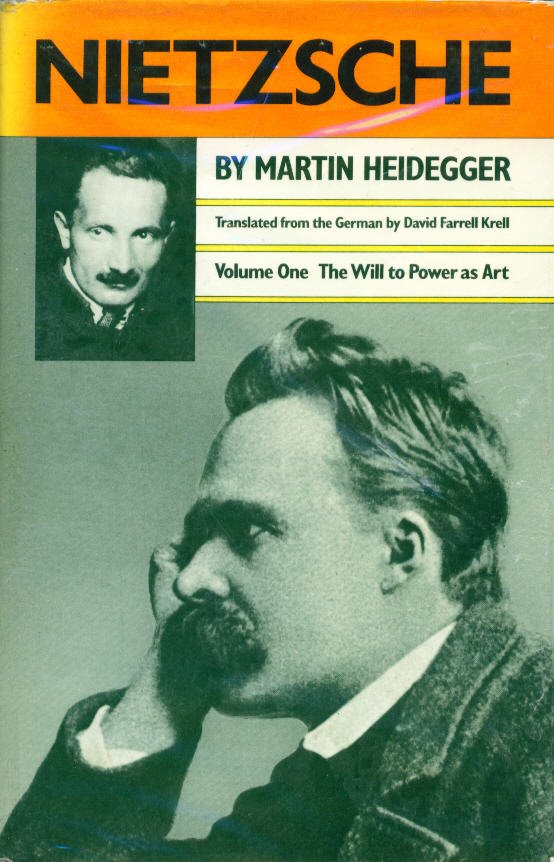
The Will to Power as Art  Posted by Picasa

3.13.2006


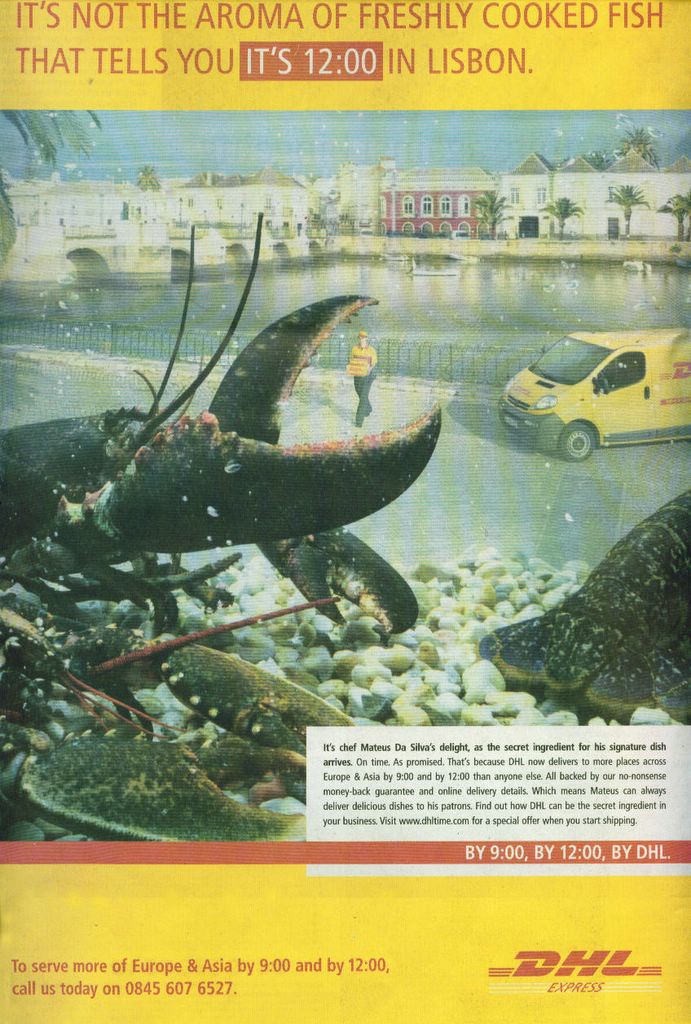
No it's not... Something tels me it's 12:00 in Tavira! Posted by Picasa

3.12.2006


Prazeres simples às vezes são tão complicados Posted by Picasa

Tricotando Posted by Picasa

Comemorações! Posted by Picasa

Uma nova descoberta: Dao e bolo de chocolate! Posted by Picasa

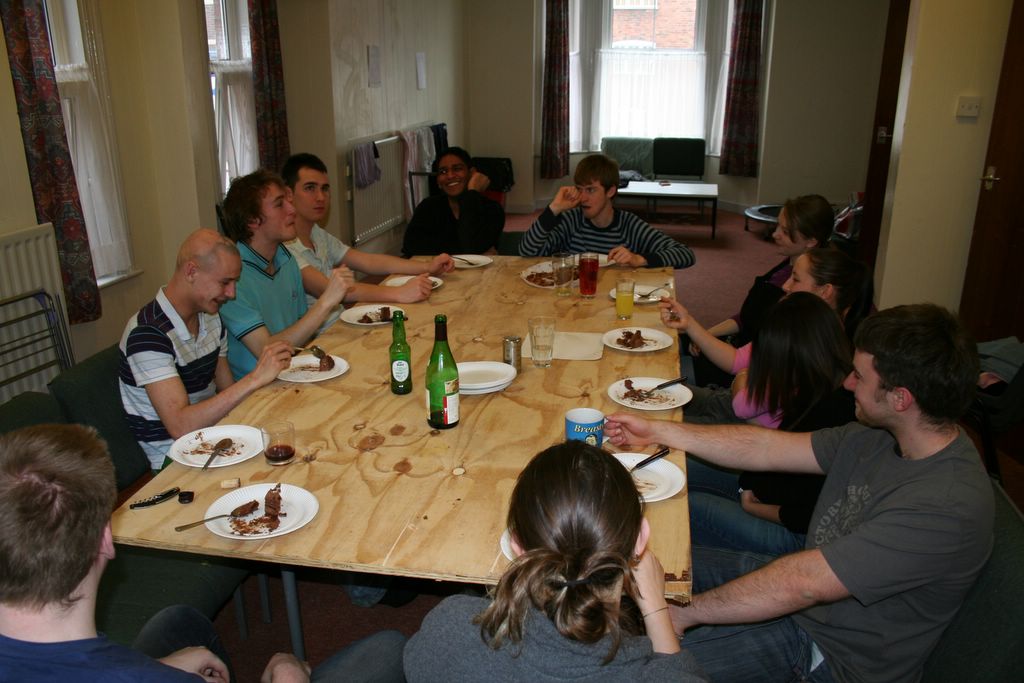
A cool lunch with my house mates Posted by Picasa

Screen print perspex Posted by Picasa

The canvas comes back Posted by Picasa

3.11.2006

LONDON CALLING

LODON IS THE PLACE FOR ME!

HAHAHAHA

HERE WE GO!

(I have a place in the Saint Martins' MA course!!!!!)

CRAIG is in as well !!!!!

3.10.2006


Momy... Indigo... Posted by Picasa

The most likely design for the back... Posted by Picasa

Take a look at Thom's blog (link on the side bar) if you want to see the original Posted by Picasa

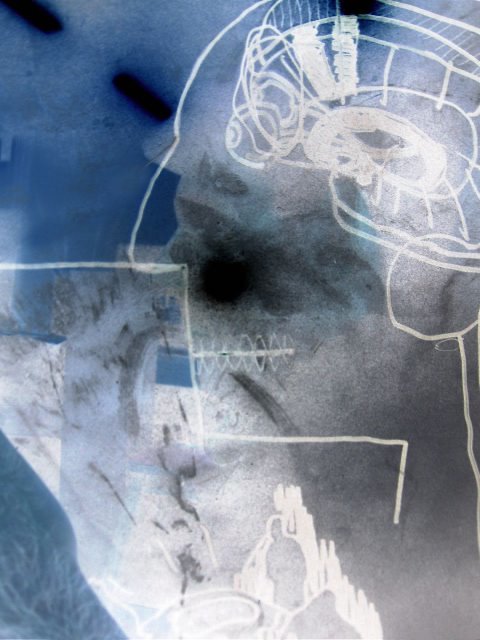
Imaginary X-ray Posted by Picasa

Glass: myth and dreams

I just want to write down a few words about glass and the plans I have to develop a few projects with it in the future. There are many questions we have to ask about glass before one decides to start working with this material. First a few scientific basic ideas:
Glass is amorphous and unorganized material... so we are forced to qualify it as a liquid even though it is rigid. There is no structure, pattern or crystalline organization of any sort. The fact that glass is cooled so quickly it doesn't allow atoms and molecules to crystallize properly. So we end up with a "frozen Liquid" and this fact led to a ridiculous myth which says that if we wait many years glass will slowly "melt" down, becoming thicker on the bottom and thinner on the top. This is not true but could be used to do a series of shapes related to this myth. The reason why people think this is true has to do with the construction of the old glass windows in churches and cathedrals. These were made out of lots of little bits of hand made glass with a lot of thickness variations and the people that built them knew that the window would be easier to build and would last longer if they placed the thickest side down... It would just make it more stable like a pyramid. The mistake/problem happened when people started analyzing these panels a few centuries after and realized the glass was apparently "moving" due to the action of gravity. It was just an illusion but an interesting one.

I don't know how many contemporary artists are using glass but the craft techniques are not obvious and require a long learning period. People that manage to learn how to use it spend too much time becoming skilled technicians and do not have enough input to be aesthetically sensitive and change their approach to this highly skilled work that is almost always kitsch. The exceptions are usually specific commissions.

There is one more thing I like about glass. It is made out of sand. I know it's a special kind of sand. But it still connects me to those sunny moments on the beach when everyone just came from the ocean and the sand quartz crystals are shining like diamonds.

Great art works that I admire were made out of glass. The Large Glass Duchamp painted and framed is a great example. It's almost like the Mona Lisa of conceptual and language base art.

Other friends have been using glass sheets in the past few years... Filipe Rocha da Silva is making probably his best work ever with glass in his Lisbon Studio. Cabrita Reis paints glass frequently. Craig Cooper started exploring its reflective properties last year using black paint. Another Portuguese artist did exactly the same for the Venice Biennale but I can't remember his name because I didn't like his work.

Let’s make a reference to the fact that working with glass is dangerous. Both Craig Cooper and Duchamp ended up exhibiting broken glass. It is something a practitioner has to be ready to deal with. It will have to be taken as a natural development. It is something that will always have to happen. Sooner or later the glass will be in bits like any other art work. The main difference is that with glass everything happens in a moment making it much more dramatic and intense.

When I start using glass in the future I will have to try to play around with its interaction with metal, paint, layers, lights, architectural references and immersive experiences. Glass is cold but protects us from the outside. Glass is expensive. Glass is a bad heat conductor. It usually brakes when warmed up unevenly exactly because of that. It's rigid, the heated area expands, the other side doesn't... bum! It's always a remarkable event if there are no injuries.

When I start using glass I'll only need rectangles and squares of several different sizes. My work will happen on its surface, frame, layering and assemblage. For now I'm only using Perspex. That will change after summer time.

3.09.2006


As if I were 8 or 9 feet tall... Falsidades Posted by Picasa

Esbocos incorrectos Posted by Picasa

On a durty wall... Posted by Picasa

Almost floating... Posted by Picasa

Playing around Posted by Picasa

Absent assemblage Posted by Picasa

How would it look on the wall? Posted by Picasa